How Machining Drives F1 to Victory
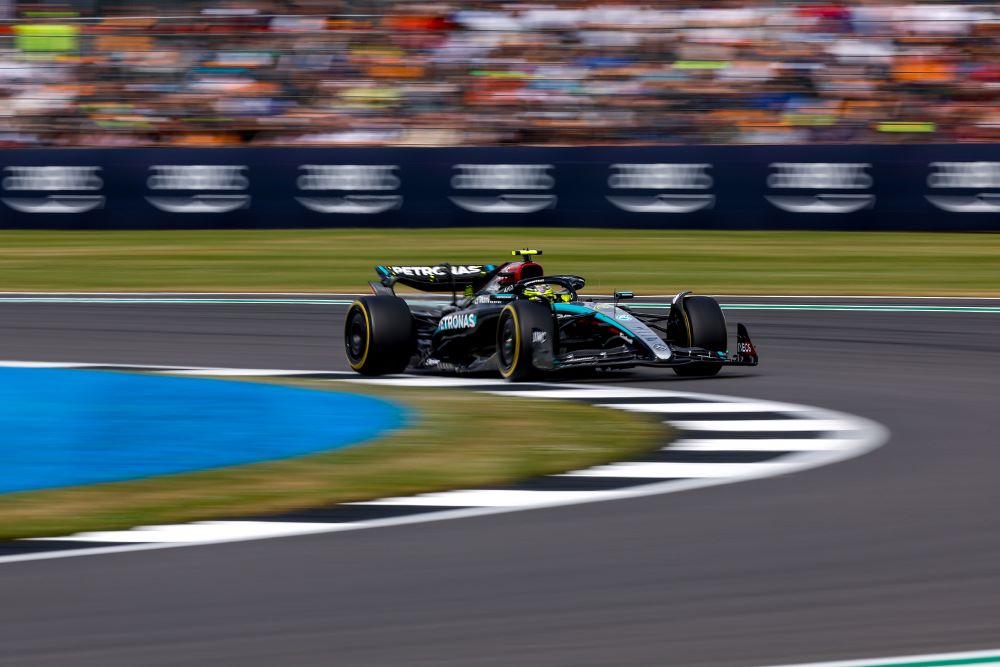
Image courtesy of Mercedes-BenzThe roar of the engines, the skill of the drivers and the speed of the cars. Formula 1 is a thrilling arena watched by millions of fans around the world. The scale of the industry is staggering, worth $2.5 billion. Of course, behind every race and record-breaking lap time is a meticulously engineered vehicle. An F1 car can have up to 14,500 parts all working to achieve maximum performance and speed. With this level of specialisation, precision and repeatability required for the manufacture of these cars, it’s only natural that machining plays a key role in the building of these cars.Here we take a look at how machining keeps motorsports at the cutting edge of technology.
The Need for Speed
[spacer height="50px"][caption id="attachment_40824" align="alignnone" width="1000"]
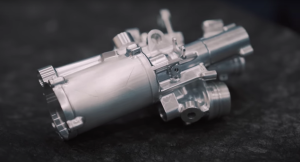
Image courtesy of Mercedes[/caption][spacer height="50px"]In motorsports speed is everything. In F1, each team has a unique car and the design and technology are continuously developed to stay ahead of the competition. With such a meticulous focus on every part of the car, the designers and engineers start developing the next season’s car before the current season has even finished. Machining is critical for maximising the aerodynamics and power of each vehicle, starting with the materials.Composites are widely used in F1, chosen both for their strength and weight. Mercedes’ F1 team offered a look into its on-site machine shop and discussed how titanium stock becomes a race-ready part. As aptly-named Mercedes engineer James Peddle explains, “we could make it out of steel but there would be a weight penalty associated with it but titanium - we can get a much lighter part for the same size.”However, speed is as much of a consideration behind the scenes as it is on the race track. As motorsports machining company Shearline XL outlines, “Motorsport is a high-pressure industry that requires the highest levels of precision engineering, we fully understand that components are often required with very short lead times.”In fact, as James Peddle explains, “Sometimes we’ll be machining a part before they’ve even finished designing it.”
Perfect Parts
[spacer height="50px"][caption id="attachment_40822" align="alignnone" width="1000"]
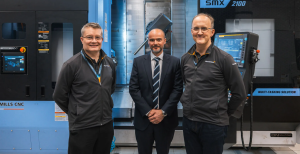
Image courtesy of McClaren[/caption][spacer height="50px"]AMFG has spoken at length about how machining is key for the production of precisely manufactured and complex parts. The ability of machining to make parts that brave the cold vacuum of space also makes it ideal for producing parts for the harsh conditions of motorsports.Aside from producing speed and materials, complexity is also a key requirement of F1 parts. As such, the flexibility offered by 5-axis machining allows motorsports to produce highly specialised parts. The Mercedes machine shop boasts 24 CNC machines, as James Peddle explains, “13 [machines] are 5-axis that allow us to machine all sorts of weird and wonderful shapes”.As well as getting the edge over a rival team, it’s vital for parts to undergo extreme testing to ensure their safety on the track. While motorsports can be thrilling, hurtling around the track at high speeds can be incredibly dangerous. Malfunctioning cars would not only cause competitive disadvantages but could be fatal for the drivers.As Motorsport magazine explains, rigorous checks are employed for every part, “Computer-based coordinate measuring machines (CMMs) and hand-held laser devices are also used to check dimensions, measuring to an accuracy of microns to ensure perfect fit and legality.” Not only does each part have to measure up to highly specific standards but they also need to be manufactured in huge volumes. As Motorsports magazine highlights, each of thousands of parts needed for each car comes with its own set of spares.At this level of scrutiny and volume, the precision and capability for high-volume manufacturing offered by machining is key.
The Motorsports Machine Shop
[spacer height="50px"][caption id="attachment_40835" align="alignnone" width="1000"]

Image courtesy of Red Bull[/caption][spacer height="50px"]The technical requirements are intense and the stakes are high, how do machine shops operate to meet the demands? The McLaren Technology Centre (MTC) ensures that no second in the team’s shop goes to waste with 24/7 production overseen by separate day and night shift crews. According to McClaren, “These are key to the speed and success of car build and producing upgrades throughout the year, meaning that a range of consistent reliable machines that can run during the day and night are vital. Many of these machines will be used multiple times every single day, whilst others will be switched on and set-up, before being left to run throughout the night.”As well as full production schedule, the latest equipment is key for this level of machining. Earlier this year, McClaren revealed the updates that it had made to its machine shop. As well as “their own wind tunnel, a next-gen simulator, and our new composites facility” the team installed a new suite of machines. According to Spencer Ford, McLaren’s Head of Machining & Additive Manufacturing, (another apt name for an F1 machinist), the MTC is expecting the new machines to “increase the speed of production by as much as 10 to 20%”Similarly, Red Bull partners with DMG MORI for their machine shop and reports that the “range of machinery at Red Bull Racing relies on includes 20 CNC machine tools from DMG MORI including DMU eVo universal machining centres.”Moreover, Ferrari uses robots to automate its processes and keep up with the demand. As Ross Brown and Oliver McIntyre describe, the robots’ “life is inevitably demanding. One machine will hold different tools covering diameter, tolerances and geometry. Ferrari’s robots can change their own tools as they go, depending on the individual requirements at the time – or even replace them completely (some tools will last a year, some survive as little as ten passes).”
Final Thoughts
[spacer height="50px"][caption id="attachment_40828" align="alignnone" width="1000"]

Image courtesy of Mercedes-Benz 2023 Bahrain Grand Prix, Saturday Sebastian Kawka[/caption][spacer height="50px"]For machining enthusiasts, what happens on the shop floor can be as fascinating as the races themselves.Every victory on the track is built on a foundation of meticulously crafted components, each a product of cutting-edge machining techniques. As technology continues to evolve, so too will the capabilities of both motorsports and machining, driving the pursuit of speed, performance, and excellence to new heights.In the world of motorsports, where every millisecond counts, machining is not just a process—it's a critical partner in the quest for success.As fierce competition pushes the technical requirements made on part production, motorsports offer a glimpse into the next era of machining. Even for those who don’t follow the sports, the F1 machine shops have a lot to tell us about the potential of machining itself.








.svg)

Subscribe to our
newsletter