Exploring Machining Education with Jacob Pedersen
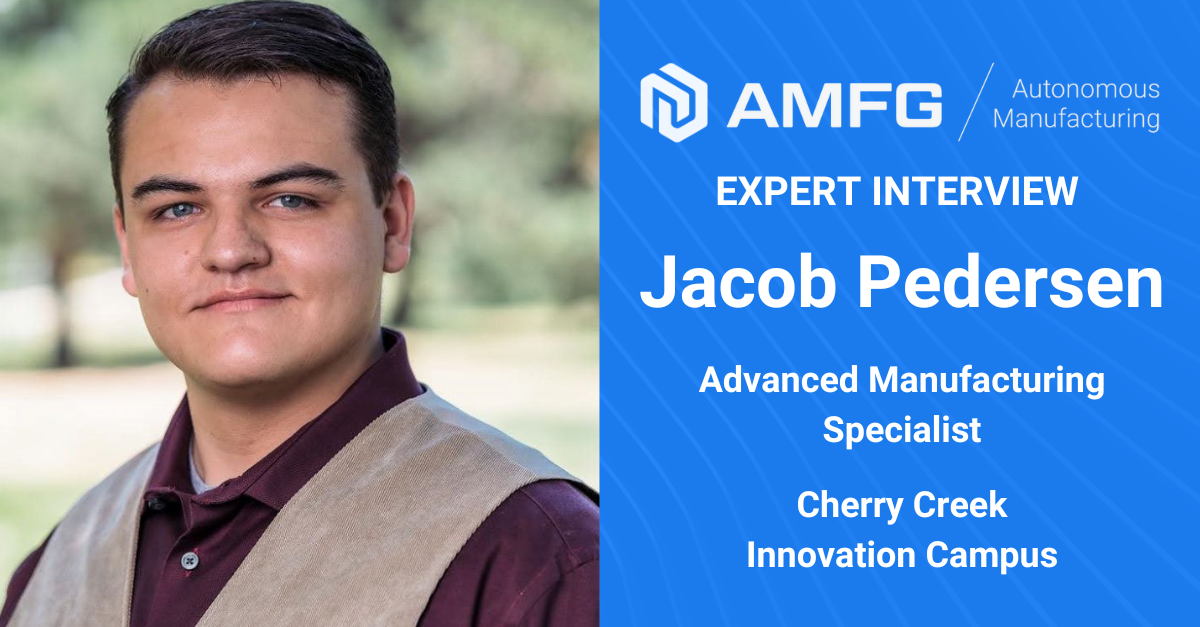
Jacob Pedersen is championing a new kind of CNC machining education. At only 24 years old, Jacob is an Advanced Manufacturing Specialist at the Cherry Creek Innovation Campus (CCIC) based in Colorado. Specialising in career technical education (CTE), the CCIC offers rigorous, high-tech programming to set its students up for success.
In an industry where manufacturing is facing a skills shortage, the CCIC is the blueprint for a model of education that works with industry to provide real opportunities for its students.
We sat down with Jacob to discuss why traditional education isn’t for everyone, the life lessons we can learn from martial arts and what a new generation of manufacturing influencers are bringing to the table.
My first question when I interview people is usually “How did you get into manufacturing?” but I was looking at your LinkedIn profile and saw that you're a martial arts floor instructor and I just have to know more about that.
I grew up middle class, didn't really enjoy school and I was looking for hobbies. I bounced around a little bit between swimming and soccer until I started doing martial arts and found a big passion there. It was a good way for me as a kid to develop some of that discipline and respect that sports give you. That was the one that really engaged me. During my time, I've gotten to do more, teach more and see the effect it has on other kids. I can talk for days about how it can benefit someone, give them more discipline and teach them how to engage in the world.
Martial arts helped me realise that I hated school and I needed to find an alternative.
I had some engineering teachers that really engaged with me differently. For most teachers, if a kid doesn't behave in their class that kid has to get in line and behave. But I had some engineering teachers who said “Hey, we like you you're taking this serious.” They would treat me as an adult, that really mattered to me.
The story goes that in 2016, my mom and I were at my parent-teacher conferences, going to every teacher and asking, “Where do I go from here?”
I clearly didn’t like school and post-secondary education wasn’t the thing for me. But we know that someone like this can have some discipline and a strong work ethic - he just doesn't like the homework or being lectured to. Where do you put this kid?
A lot of the traditional teachers told me I needed to figure out how to tolerate being told what to do. Then we get to that set of engineering teachers and ask the same question, where do you put a kid like me?
One of them pulls out this flyer for a new program in Colorado called CareerWise and says, “This came across our desk. It's brand new but we think you should take this.”
I got a chance to take an apprenticeship in a manufacturing facility just up the road from where we're at now. I signed on for three years, finished my senior year of high school and had two more years on my work contract doing that.
Little did I know that our school district passed funding to build the Cherry Creek Innovation Campus (CCIC) where we are today. It was going to be a new campus where they could give kids work-based learning opportunities in high school. They saw what we were doing and asked us to consult and tell us what curriculum they should teach.
I got to see the building right now when it was just dirt and mortars.
I was looking for a change away from the shop and to whatever the next thing was going to be. I already knew the staff here and one of the administrators gave me a call and asked if I wanted to get involved.
I jumped on the opportunity.
Now this is my full-time job, I’m working with kids, telling the story of working in our machine job and educating the next generation on the the technology’s fundamentals.
I tell them that in a year, they can take an apprenticeship or work opportunity and be okay in the shop. Most shops aren't built for entry-level positions, but I can give a kid some of that foundation. We put them in that role and say “you need to buckle up and learn,” and we find that the kids always take it and run with it.
We had a kid two years ago graduate and now is running his own garage shop. We have multiple apprentices in the industry working with the Department of Labor.
We have plenty of others who go through internships and a bunch of just go to work. And that's just within manufacturing. This building offers seven pathways. It's manufacturing, construction, culinary skills, it’s everything.
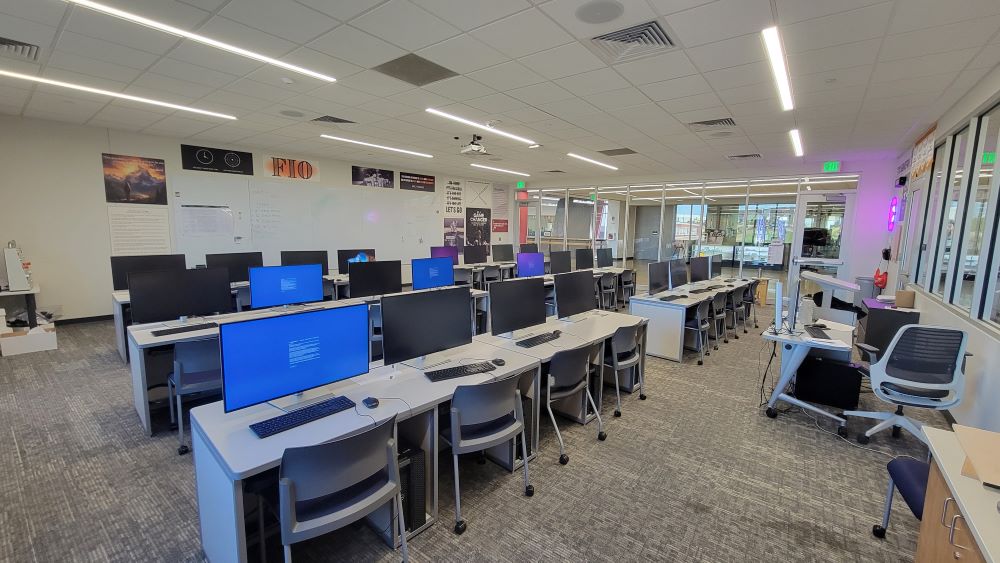
Image courtesy of Jacob Pedersen
I read that you’re passionate about non-traditional education. How have your experiences with education made you evaluate how we approach teaching and learning?
There are seven or eight home high schools in the district and then there's our building. In the morning, a student goes to their home high school, and then there's a second bus that takes them to us.
This year we are seeing that most of them had counsellors or educators who said, I don't know what to do with this kid, send them to the CCIC. Instead of trying to work with this kid, and sending them to a GED program, they're sending them to us.
We have kids from various backgrounds with different skills and needs, but we treat them like adults with respect. We're also with them for a greater length of time and that face-to-face time is way different. It's respectful and it's caring.
Most education doesn't do that. Most education says sit down, shut up, and work.
That's unfortunate because we see way better output here. If more teachers cared about their students and we had longer face-to-face time and were able to give that care and that affection, I feel like we would change the way that normal education is done, let alone work-based learning.
It sounds like so many students would benefit from having more CTE opportunities available.
We have kids coming here from all different kinds of backgrounds. Sure, we have those who benefit from non-traditional education systems but we also have kids checking out different career prospects and straight-A students trying to get some college credits and network with industry.
Also, we have an application process that every student is required to go through before they come here and there's a waitlist of 300 or 400 students. That's amazing. The ones who want it, take it and run with it.
We're lucky to have a full-time social worker, two counsellors and plenty of other staff who can work with kids one-on-one. We're lucky in a lot of ways, but also we just do things differently.A student who comes out of a program like this is going to be a different young adult.
That's so interesting. Picking up on what you're saying about apprenticeships, can you tell me more about this new apprenticeship movement?
Traditionally an apprenticeship would have been working with a union and that does still exist. However, what happened here about seven or eight years ago was that a gentleman in Colorado by the name of Noel Ginsburg had a set of kids in lower-income education. He said to 24 or 26 of them, if you continue your education, I will pay for your college and it paid off dividends.
He saw them through from second or third grade through all the way to their end of education and he realized that the problem was that industry was not engaged with education. There was this misalignment where traditional education, was not aligned with the workforce, and then higher education still was not aligned with the workforce.
How can we bring these two back into the middle to treat this? The movement pioneered three-year apprenticeship models and it was very intentional in going beyond what traditionally would have been thought of as trades. It was also electrical, insurance agencies, and JP Morgan Chase.
That is so much more valuable for a young person because they're graduating without that massive amount of debt and with some money in their pocket. That's unheard of traditionally.
I was part of that first cohort that went through, took it and ran with it. Granted a lot of them came out during COVID so the graduation rate initially was not what we wanted. But as it's continued to grow, we've been able to expand into multiple states, take that program and say it works in any political sphere, in any industry.
We can continue to do this work and put forth the idea not only to the students but introduce that conversation to a parent at an earlier age. Right now we still have parents who ask, “What is this model?” They don't understand it.
If I can talk to students in K5 or K8 and tell them that down the road there are these opportunities out there when that kid is 16 or 17 and having the conversation at the dinner table about their future, apprenticeships become an option.
We need the parents on our side too. It's multifaceted, it's businesses, it's students, it's families, it's industry, and it's schools. All of us have to come to the table and say, what can we do to create the best student?
Can you just give me a sense of your work at the CCIC and your day-to-day and what's involved in your role?
We have a CNC machining side, so we use primarily Haas controllers because that's simple to train on and gives them the basics. They're learning how to do probing, work offsets, tooling offsets and run simple programs.
The other side of that is the fundamentals and machining side. That's water routers, a water jet, a plasma cutter, 3D printing and injection moulding. There’s a little bit more variety on that side. After a semester, they switch so the CNC students are in fundamentals and fundamentals are in CNC.
Our CNC2 students are really in a great spot this year. We're using the Titans of CNC training. That's been a shift and it'll probably shift again as we get better. We're going to work on CAD one day. Once you get the CAD model, now you can do the basic CAM. Then you're gonna build all your tools, take to the machine and run your program.
Then we introduce a higher-level project where they’re working with a partner, they have to design an assembly, understand the tolerance, do the CAD/CAM machining and then inspect it.
It's so much fun to see the ones that really take it and get that light bulb moment of, “Oh, I made this part and I've inspected it and I know it's good.” You see that pride and then their ambition starts to run wild. “Oh I have a manual car, I want to make a shift knob, I can do that now.” That level of engagement is just so awesome to see.
We also work with some external organizations called CTSOs (Career and Technical Student Organizations). This year, we're doing National Robotics League, basically battle bots, miniature battle bots. Most of our students also participate in SkillsUSA which is a national CTSO that helps students to become skilled professionals. No matter what we do, our priority is cultivating the best possible experiences and outcomes for students. That’s something we’re really proud of.
Most of the time, I'm face to face with students or working on getting industry into the building to see the place and interact. Tomorrow's Manufacturing Day. We're going to take 34 kids, down to a local community college, let them interact with business and talk to employers.
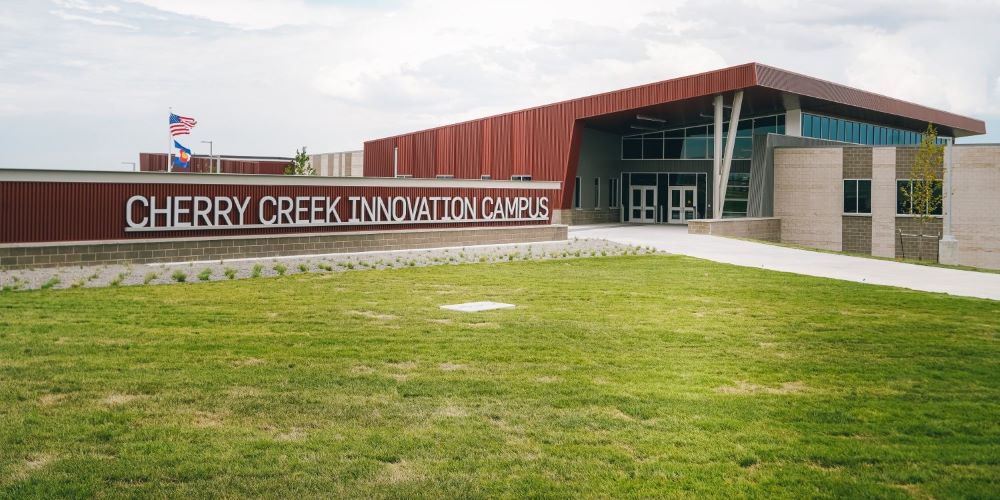
Image courtesy of Jacob Pedersen
On the back of what you were saying about getting the industry to align with education and families, everybody I've spoken to has at some point mentioned the skills shortage. It feels like what you're doing speaks to that challenge. What’s your experience of that?
It's something we hear a lot. We did a tour last year with a guy and he was blown away by our facility. He told me, “I have kids from this community college and this community college and this trade school and this tech school, and I fire most of them because they don't have a good education. I'd be willing to take on one or two of your kids. It's going to be the same deal. If they don't work out, it's not going to work out.”
We had two kids engage with him in employment roles. One of them stayed on and one of them wasn't the right fit. We had a good conversation with that student and told him, “It wasn't right. Do an exit interview, ask him what you messed up on, ask him how you can be better.”
Another student started his own business. He was an interesting kid. He took on an apprenticeship. He left there, took on another job, and did that for a couple of months. It wasn't the right fit. Then he started his garage shop. He and his dad put in for a Haas machine and bought it, and are running their own little job shop now.
Good for you! You found a better fit!
Certainly, not every one of our students is at that level where they can really excel, but most of them can at least start.
It's also on the business too. Some of them need a senior level engineer, we can't provide that. But let us do a field trip. If you're willing to take an entry-level employee, or if you have the funding that you can put a part-time kid in, let them see it.This building has been a model for multiple states and school districts. I think we give an average of a tour and a half a day in this building. It's a ridiculous number of tours that we give.
Last week, I went down to another facility half an hour down the road. They had seen our place and built a model of their own. They took an old car dealership that had two different buildings fest it in refit the whole space, and now they have a nature sciences area, a construction area, and a manufacturing lab.
If you're willing to put a little bit of money into a building like this and plug it into school districts, then the students can benefit from having industry in here all the time. The more we can build centres like these, the more we can provide those educational and training opportunities to kids.
Industry is willing to make donations, do tours, do field trips, talk to students and take them on. They tell us what they need and then the instructors can work with that, shift and adjust and then put the right student in those roles.
If you have these kinds of programs and this holistic approach, everybody gets what they need. The students get an education that's going to benefit them. Businesses get workers with the skills they need.
It's not easy. Not every person who comes in on a tour can give a donation, do a field trip or take on an intern or apprentice, but at least we have a relationship now, and maybe five years from now, that turns into something more.
During COVID, we called up one of our partners and said, “Our construction class cannot run right now. We cannot find materials.” Hung up the phone.
20 minutes later, we got a call back and they said “$20,000 worth of materials on its way today. Another 40 over the next two.”
That happens because they're in here. They shook hands, they met the people, they met the instructors and met the kids.
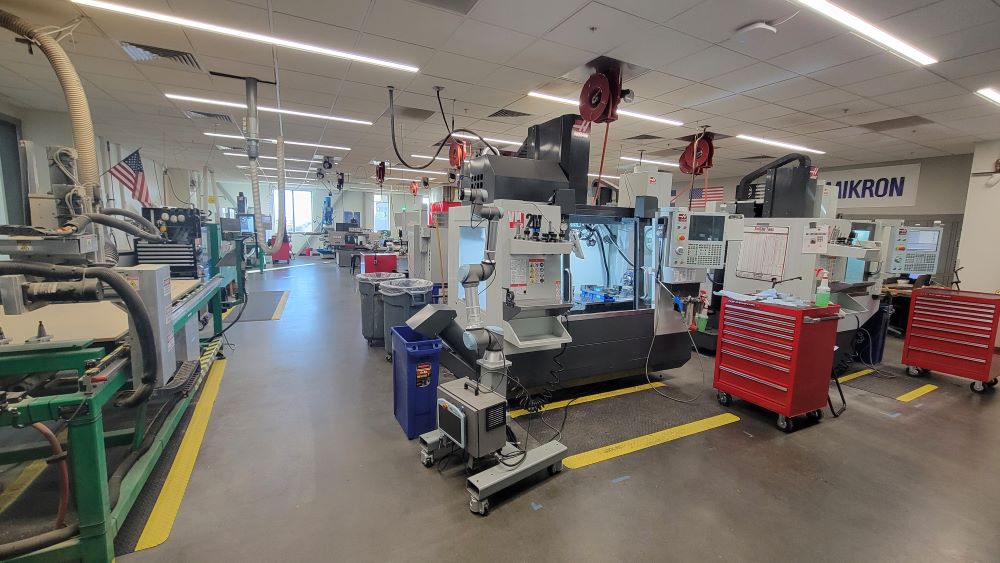
Image courtesy of Jacob Pedersen
How is being an educator made you a personal question, but made you think about your experience. Do you look back now and sympathise with your old teachers or are you the educator you wish you had had?
I'm a young guy. I'm only 24 years old, when a kid looks at me, they don't see someone that's old and grey and has a beard and is a little bit curmudgeonly. They see someone who could be maybe a big brother or an older cousin.
I go back to what I learned in martial arts respect and discipline. It works with three and four-year-olds, but it also works with 16 and 17-year-olds. It’s about being honest, having a conversation and not acting like you’re better. I do know more than most of these kids, but they'll teach me stuff all the time.
There’s a quote that goes, “I learn more from a student's question than the student learns from my answer.” If someone asks me something, clearly I haven’t done the right thing and I need to find a better way to adapt. That makes the teachers better. The students who come here have crazy higher retention rates; they want to come to our classes.
People who care about the kids, the kids care about them, the ones who just show up, just show up, and that difference is clear. There’s a bigger life lesson that feels a little preachy, but if care about people and have a bit of affection for them it helps develop that rapport.
When you're an educator it produces a better relationship and a better student, a better output.
There's a difference between the teachers who really try and put an effort into establishing relationships with you and are passionate about their subject and others who are counting down the days to retirement. It comes across. You mentioned Titans of CNC before. How would you describe their influence on the industry?
I get torn. I'm going to say something abrasive and controversial: I see the Titans of CNC stuff, and I don't want to like it. I don't want to like it, but it's really well done. They have a massive media department whose job is to put videos out there.
Titan Gilroy seems to care enough about education, both from his background being in the prisons and with schools, and I have to respect that. It’s done a lot to democratise manufacturing and make it accessible.We talked about the skill shortage a second ago. If you don't see it, you can't become it. He's done a good job, of making it visible. From the education side, his quality is really well done.
I recently spoke to a manufacturing marketing specialist and he explained that we’re seeing a trend in manufacturing influencers, what’s your take on that?
I struggle with a little bit. If it gives more awareness of the industry, its issues and opportunities, then I have more leniency with it.
But the ones who are out there clearly saying “Look at me, look at what we're doing!”
I try and tune them out. It doesn't they don't do anything good for the industry. They don't benefit anyone other than themselves.
I don't mind them, but if I could have a switch to turn them off in any media feed, I would turn them off.
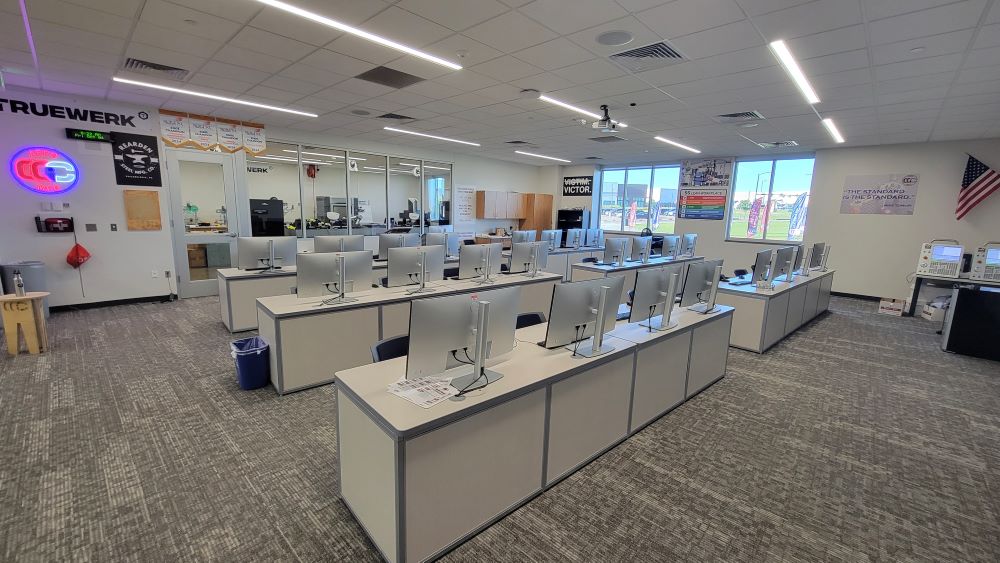
Image courtesy of Jacob Pedersen
When you think about the future of manufacturing, what's one thing that you're excited about, and what's one challenge you think the industry is going to face?
This is going to sound cheesy, but I'm excited by AI. I was aware of ChatGPT before it became public; it’s changed the world in a lot of ways. It has also caused some struggles, everything has an AI in it now, which nine times out of 10 isn't quite real, or it's not being totally honest in their language.
Even so, I've played with toys that will fully CAM a part for you. You still need a person there to double-check it but the growth of AI is phenomenal, and it's skyrocketing in a way that we could have never predicted.
What's something I'm afraid of?
I don't know that there is much to be afraid of. I think the world and the politics and all of that is something that we need to be wary of, and it has an outsized and unexplainable effect on manufacturing but people still need things. You still need your cell phone, you still need the shirt on your back. That's not going to change.
My final question is, and I suppose that you’re particularly well-placed to answer this. If you were talking to someone who was considering going into manufacturing but who was sitting on the fence. What would you say to convince that person to join the industry?
When I first started thriving in the machine shop, someone asked why I took that path and was kind of looking down on it. I told them that school was never right. I have enough discipline that I could have kept going with higher education but there were a couple of factors at play that made me choose not to initially.But now I’m working in a machine shop where yesterday I was making a medical part to deal with heart palpitations. My mom was having heart palpitations at the time so I made a part that was going to go into the machine that was going to help my mom.
And I thought about it, looked at him and I was like, “You can say I’m going to be a doctor. And that’s great! But you’re going to need tools. I gave you the resources to succeed.”
I could have gone into the military and been a fighter pilot but I gave a hundred fighter pilots black boxes to keep them safe.
You look at manufacturing and think, why not? It’s a far lower barrier to entry, the cost of education is severely different and you’re enabling the world to function. You’re allowing people to do their jobs.Every part serves a purpose, and everything that you do matters to someone somewhere. When you work in manufacturing, you’re the source of how the world operates.





.svg)

Subscribe to our
newsletter