5 Key Barriers to Discrete Manufacturing And How to Overcome Them
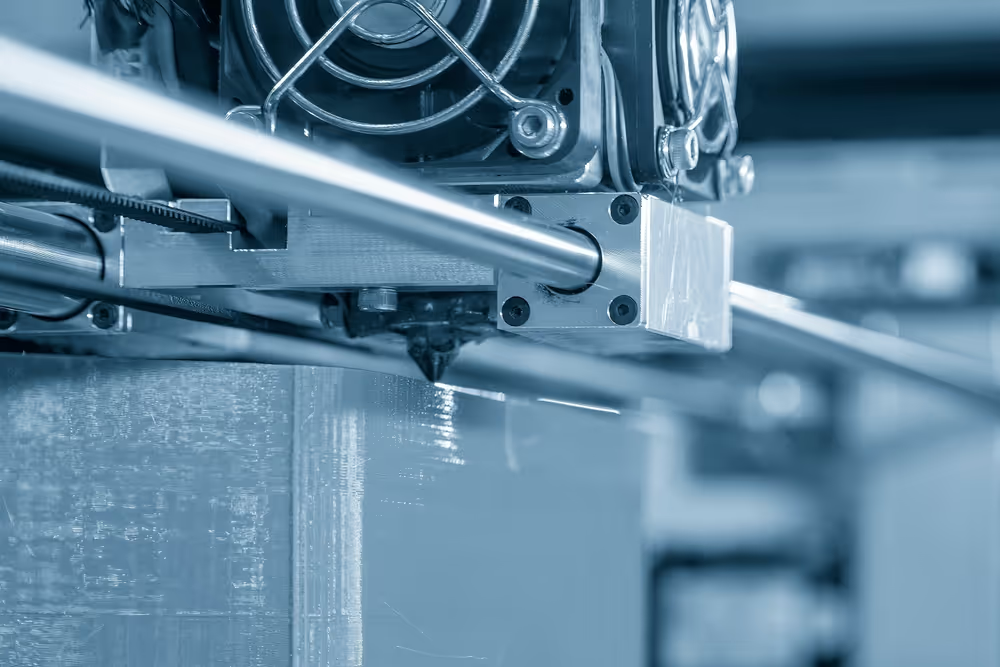


Discrete manufacturing is in the middle of a digital renaissance.
As demand grows for smarter, faster, and more flexible production, manufacturers are rethinking traditional approaches to everything from supply chains to quality control. Yet, despite the promise of Industry 4.0, several persistent barriers continue to challenge the sector’s evolution.
At AMFG, we work closely with forward-thinking manufacturers on the path to full digital transformation. In doing so, we’ve seen firsthand the friction points that put a spanner in the works.
Here are five of the biggest barriers facing discrete manufacturers today, and how they can be overcome.
What is discrete manufacturing?
Before discussing how to tackle problems in discrete manufacturing, it bears unpacking the term first.
‘Discrete manufacturing’ refers to the process of making finished products that are easily identifiable and different from each other. They can be counted, touched, or seen, and are therefore different from the products of process manufacturing, which creates a product by refining raw ingredients.
To illustrate with some examples: automobiles, furniture, smartphones, aeroplanes, defence systems, and toys are all products of discrete manufacturing. They are all separate products, composed of separate, individual products themselves, and could be feasibly broken down at the end of their lifetimes to be recycled.
Take a phone: it is made of a plastic case, an LCD display, a mainboard, a PVC keypad, sockets, and cables. They are made from different materials at different places.
On the other hand, pharmaceuticals, food and beverages, refined oil, and paints are good examples of products of process manufacturing; they cannot be broken down to their basic components.
Discrete manufacturers employ various routes of production, including assembly lines and various technologies, including CNC, additive manufacturing, and hybrid technologies.
Discrete manufacturing makes the world go round, but inefficiencies across the timeline of a product run the risk of costing companies money and time. Here’s how to overcome those hurdles.
1- Navigating complex supply chains
Today’s discrete manufacturing supply chains are global, intricate, and more interdependent than ever. A typical product might include components sourced from dozens of suppliers across multiple continents. While this model offers cost efficiency, it also creates fragility. Global events, from geopolitical tensions to pandemics, can ripple across the entire chain, leading to production delays and escalating costs.
To stay resilient, manufacturers are investing in advanced supply chain management solutions that provide real-time visibility and predictive analytics. Many are also rethinking supplier strategies, shifting toward nearshoring and maintaining strategic inventory reserves to reduce disruption risks.
2- Outdated systems holding back digital integration
Digital transformation remains a top priority for discrete manufacturers, but legacy IT systems often get in the way. Many plants still rely on disconnected software tools, outdated ERP systems, and paper-based processes. These silos make it difficult to share data, automate workflows, or respond quickly to change.
Forward-looking companies are now replacing legacy systems with unified digital platforms that support end-to-end production visibility. By integrating cloud-based MES, ERP, and IoT systems, manufacturers gain the agility to scale, automate, and innovate in real time.
The foundation for a truly connected factory is digital– if you’re interested about digitising your manufacturing processes, speak to one of our experts here:
3- The growing skills gap
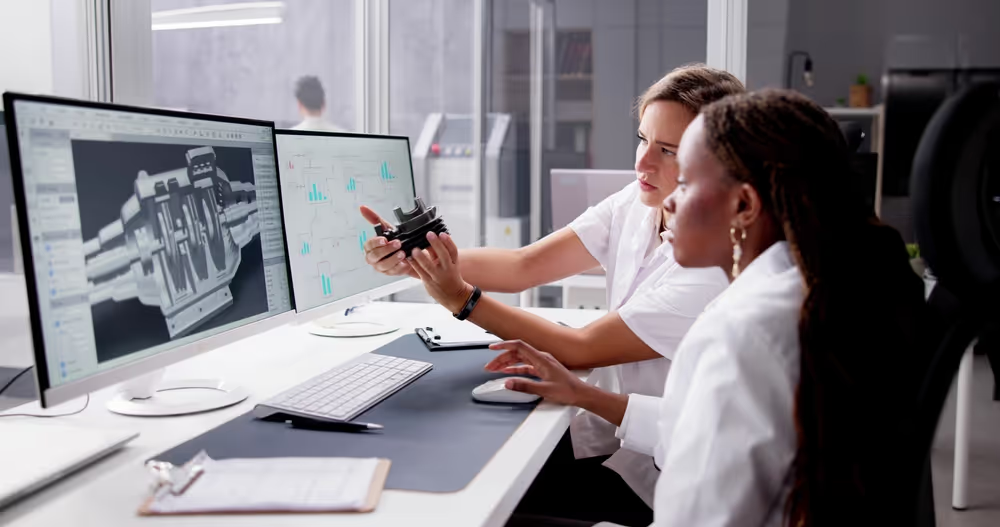
Advanced discrete manufacturing demands a workforce skilled in various technologies, including robotics, additive manufacturing, data analytics, and AI.
But attracting and retaining this talent is proving difficult. A wave of retirements is depleting institutional knowledge, while younger professionals often overlook manufacturing as a career path.
To bridge this gap, manufacturers are launching reskilling initiatives and forging partnerships with universities and technical schools. Internally, many are building strong learning cultures, offering digital upskilling programs that empower existing teams to thrive in high-tech environments.
4- Quality control and traceability challenges
Maintaining consistent quality is non-negotiable in discrete manufacturing. But with increasingly complex products and tighter tolerance requirements, traditional quality control methods often fall short. When defects occur, lack of traceability can make it difficult to identify root causes, thereby delaying resolution and impacting customer trust.
Real-time quality monitoring tools, powered by connected sensors and AI, are changing the game. When paired with digital traceability solutions, manufacturers can quickly pinpoint defects, enforce compliance, and maintain end-to-end product integrity. These tools slashes time and money spent on reworking failed products.
5- Balancing customisation with standardisation
AMFG has written about the increased demand for customised, personalised products previously. Customers expect tailored items without a longer wait or a higher price.
That’s a tough ask for manufacturers whose operations were built for high-volume, standardised production. Meeting demand for customisation can introduce inefficiencies and increase operational complexity.
The solution? Embracing flexible manufacturing. Technologies like additive manufacturing, modular assembly, and digital twins allow manufacturers to offer customisation at scale. By designing products with modularity in mind and leveraging digital workflows, companies can achieve the balance between efficiency and individualisation.
Final thoughts
While these barriers are real, they’re far from insurmountable. What sets leading manufacturers apart is not just their ability to identify these challenges, but to act on them. With the right digital infrastructure and a willingness to adapt, discrete manufacturers can unlock new levels of performance and resilience.
At AMFG, we believe the future of discrete manufacturing is autonomous and connected. By removing these 5 key barriers, manufacturers will be better equipped to deliver value in an increasingly complex and competitive world.
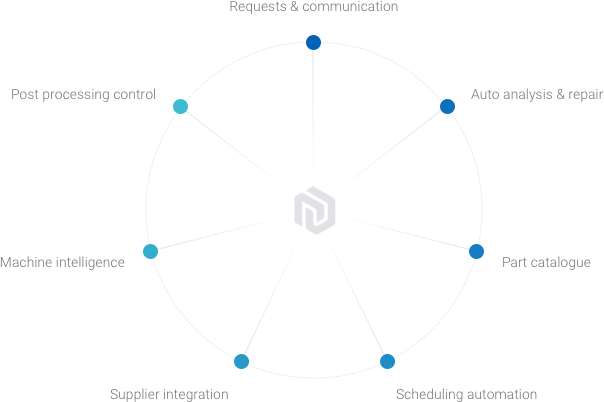
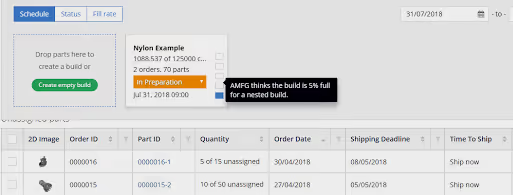
AMFG’s mission is to help manufacturers streamline their operations with our cutting-edge software platform. By automating quoting, order intake, and production workflows, we enable high-value manufacturers to adapt to complex demand with efficiency and precision, securing their place at the forefront of the manufacturing industry.
Interested? Get in touch with us to explore our platform here: Book a demo


.avif)


.svg)

Subscribe to our
newsletter