5 Tips For Fixing The Skills Gap in CNC Machining



Last week, AMFG discussed how the skills gap exacerbates barriers in discrete manufacturing. Here, we take a more in depth look at how the skills gap impacts CNC machining, and what companies can do to protect themselves.
What is the Skills Gap?
But first, it’s worth clarifying what the phrase ‘skills gap’ actually means, how it came about, and why CNC machinists are affected differently to other manufacturers.
The phrase “skills gap” is used to refer to the growing gap between the demand for skilled workers and the available workforce. What this means in practical terms is that in 2024, manufacturers were only filling 6 out of 10 job openings.
How did CNC Machining get here?
CNC Machining technology has come a long way in the last 20 years, and it can take around four or five years of education and on-the-job training to become a fully trained and certified CNC machinist. This can be offputting to younger generations, who want to start earning as soon as possible.
The average age of a machinist in the US is 45, and in the next two decades many of the current workforce will have retired. Without an influx of new, younger workers, the skills gap looks set to increase as the current workforce approaches retirement.
The skills gap is a growing problem for the CNC industry, and it will take time to fully close the gap. However, there are things that can be done now to reduce the impact on smaller businesses and job shops. So, without further ado, here are 5 tips to help manage the CNC skills gap.
1 - Manage Misconceptions

The manufacturing industry is often overlooked by younger generations, due to a range of outdated stereotypes that portray manufacturing as male dominated, badly paid, and reliant on manual labour.
The most effective way to disperse these misconceptions is to invest in promotion, so workers with no prior knowledge of machining are not put off by outdated concepts. By advertising the variety and career opportunities available in CNC machining, companies will be better placed to attract the best employees.
2 - Education

In addition to promoting the industry, providing manufacturing education to young people before leaving school is an excellent way to counteract the problem of a lengthy training period.
The Cherry Creek Innovation Campus (CCIC) is a shining example of how educating high school students on manufacturing, and simultaneously providing them with professional experience, leads to a cohort of qualified, experienced workers. Read our interview with Jacob Penderson to find out more.
Partnering with such institutions to provide work experience opportunities, or even funding, can be an excellent way to simultaneously promote your company and potentially meet your next hire, with the assurance that they’ve worked with the best - you!
3 - Upskilling

Education doesn’t end with high school. To keep pace with technological advancements, CNC machinists have to engage with regular training to continue operating at the highest level. Finding the time and resources to engage with training can be difficult, and often the pressure of meeting production demand means training takes a back seat. This can lead to machinists finding the gap between their actual skills, and the skills required by the new technology, keeps increasing.
The Titans of CNC: Academy provides a huge range of free resources for CNC education, which can be used by apprentices and established workers alike to increase their skill set. They provide extensive, in depth programmes that cover a huge range of skills and industries. As well as the fundamental academy, there are separate academies for Swiss Machining, Aerospace Manufacturing, and Grinding, all of which are packed with explanatory videos, prints, inspection sheets and more.
Utilising resources like the Titan Academy allows smaller businesses and job shops to upskill their workers without worrying about the quality of training materials or tuition fees.
4 - Automation

While all the tips on this list are useful, automation will have the quickest, most significant impact on the skills gap problem.
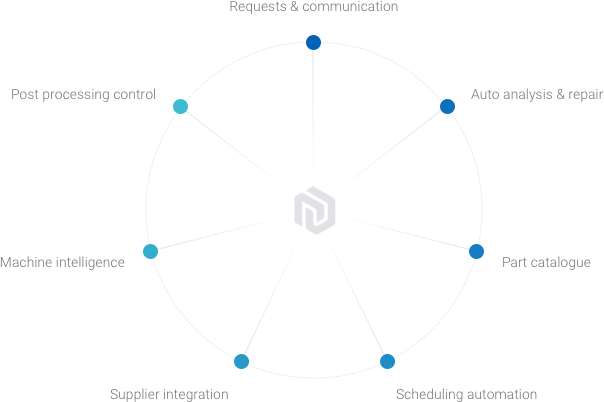
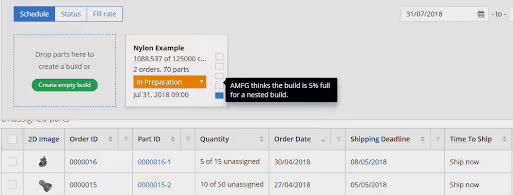
Using specialised software can alleviate a huge amount of admin, speed up quoting processes, and prevent silly mistakes from setting back production. Automating simple, but time consuming, jobs can speed up a shop's workflow, enabling machinists to redirect their focus to where it’s really needed, and engage in training programmes.
Using software from reputable suppliers, with an in depth understanding of CNC machining, can be revolutionary. Contact AMFG here to learn more.
5 - Retention

Getting the staff, and keeping the staff, are two very different ballgames.
According to a 2024 survey conducted by the UKG Workforce Institute, 56% of manufacturers say employee turnover has a moderate to severe impact on their bottom-line finances, and with the current skills gap keeping staff is more imperative than ever.
Aside from salary, there are some things employers can do to improve staff retention. Providing employee benefits such as sick pay or holiday pay, creating a workplace that encourages learning and personal development, and ensuring your employees feel valued, can lead to increased employee loyalty and retention. The occasional free coffee, or compliment on a job well done, will go a long way.
The growing skills gap in CNC machining is a major issue that disproportionately affects smaller businesses and job shops. By utilising these tips and focusing on attracting, training, and retaining talented workers, you will be able to protect your business, and fill those job openings with a skilled, loyal workforce.
About AMFG
AMFG works with high-mix, low volume manufacturers across the globe to streamline their operations with our cutting-edge software platform. Our scalable tools automate multiple stages of the manufacturing operations, providing automatic quoting, reducing human error, and cutting down on monotonous admin work, while maintaining the highest level of data security. We enable high-value manufacturers to adapt to complex demand with efficiency and precision, securing their place at the forefront of the manufacturing industry.
For more information, please visit www.amfg.ai or contact: press@amfg.ai


.avif)


.svg)

Subscribe to our
newsletter