How do you know when to turn down RFQs?
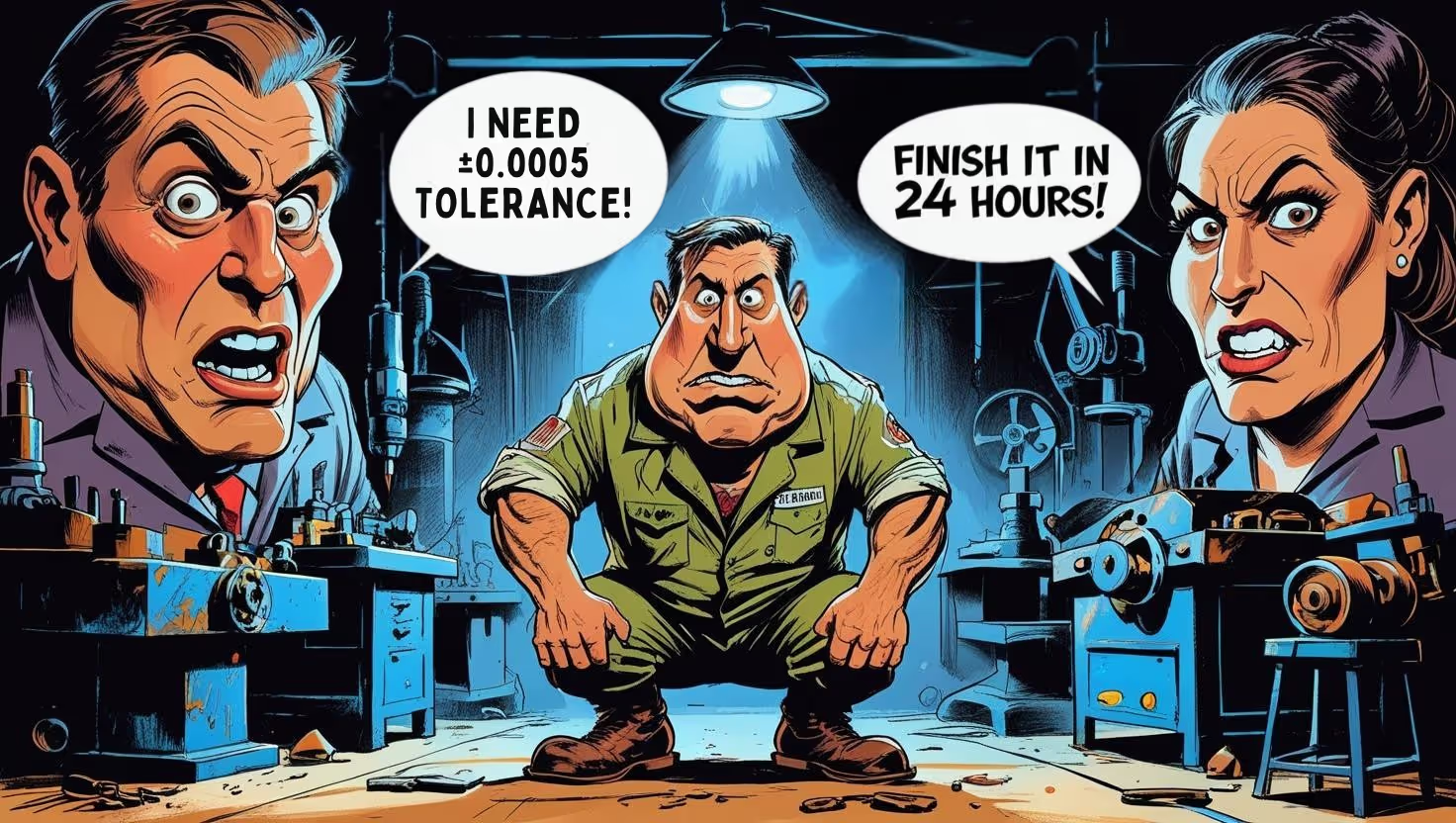


Refusing work can often feel counter-intuitive, especially for smaller shops or those looking to scale, but rejecting RFQs can be a better long term strategy for your reputation, your career, and the customer.
“When you turn down work you’re protecting your reputation. If you focus on delivering parts that are good quality, on time, and fairly priced, you’ll gain a strong reputation and repeat customers, as people know they can rely on your shop.” Henry Morris, Head of Machine Shops at AMFG.
However choosing what to reject, and when, is easier said than done. So, here are four things to consider before accepting, or rejecting, the next RFQ that comes your way.
Capability
Everyone has to start somewhere, and often the experience gained can be just as valuable as the job itself. However, taking on work that you are unprepared for can be damaging to your reputation if the final part doesn’t meet the client’s expectations. Refusing work to prevent reputational damage is often a smarter long-term option, rather than accepting every job that comes into the shop.
It’s not just your own experience you need to account for, the capability of your machines is just as important. If a job requires extremely tight tolerances, complex geometries, or very high levels of accuracy, and your shop doesn’t have machines capable of meeting these standards easily, it’s best to turn down the work. Trying to machine a part without the right machines and tooling inevitably forces you to charge for hundreds of hours of work. If another shop could do the same job in half the time with the right machines, your ability to offer competitive pricing will suffer, as will your reputation.
The customer’s capability should also be accounted for. If you receive a drawing that is cluttered with the wrong information, or worse no information at all, it’s impossible to deliver an accurate quote. The best option is to refuse the initial request, reach out to the customer, and work with them to figure out what they really want to ensure everyone’s satisfied with the finished product.
Capacity
Prioritizing existing work over new jobs is the best way to develop a reputation for punctuality. If you have a ton of clients, or lots of time consuming work, managing your time and resources is paramount, to avoid stretching yourself too thin. Getting parts out on time for your existing customers will do more for your reputation as a reliable shop than simply saying yes to every job.
Knowing your limits extends to your machines as well as time. While most things are technically possible on one or two machines, if your shop's machines are best suited to smaller jobs, don’t push them too far. Your team will have limits too, and if you have a difficult customer or your people are already stretched to their limit, refusing work will ensure your existing resources (in this case your machinists) are able to work to the best of their ability.
Volume
If a job comes in that requires huge volumes of an expensive material, or a material that keeps fluctuating in price, it’s best to turn it down. Managing changing material prices is possible with the right quoting strategy, but sometimes turning down work is the best decision.
As well as considering the material factor of high volume work, considering international competitors is also a necessity. Currently, China usually offers the most competitive prices for high volume orders, making it difficult for American or European shops to offer prices that will entice customers without making a loss. This may change as the drive across the world to reshore manufacturing and focus on domestic manufacturing picks up, but for now turning down jobs with extreme volumes is usually a sensible move.
Depending on the size of your shop, low volume work can either be your life blood, or a complete waste of resources. If you’re a small shop, low volume work like prototypes can help pay the bills without pushing your resources past their capability levels. However, if you’re a larger shop, spending time on such a small job may be a waste of resources that could be spent more profitability. Having a realistic opinion of your shop's size and capabilities will ensure you focus on the most profitable jobs, bringing you more business in the long run.
Size
We’ve spoken a lot about the benefits of turning down work, but depending on your shop's size this is sometimes an impossibility. If you’re just starting out, or going through a difficult period, taking every job that comes your way is often the only way to make ends meet and grow your reputation.
You also need to account for your cash flow, and may have to turn down work if the payment terms are unfavourable. If a customer is asking for net 90 day payment terms, and your cash flow cannot afford that time span, try to renegotiate payment with the customer. However, be prepared to turn down the job if they are not willing to meet you halfway.
Once you’ve reached a slightly more stable position, and have found your specific niche in the industry, rejecting jobs should be seen as a strategic move to help maintain your standing and position you as an expert. This is where the other considerations, outlined above, become really useful as indications of how best to grow your company.
The customer base is another factor that has to be considered when rejecting jobs. Those that are attempting to scale and expand naturally focus on taking on new jobs, meaning rejecting work is counterproductive to the overall plan for the shop. However, those that are focused on gaining repeat customers may find it more profitable to reject work from new customers in favour of existing ones.
After Rejection
When you do decide to reject a job, try to do so without burning bridges, as the customer may be a potential contact in the future. Offer feedback explaining why you refused the job, and if appropriate suggest other colleagues who could take on the work instead. This way, turning down RFQs can help you build connections with your peers, and potential future customers. So now you know, not only is turning down work important for your reputation - but sometimes it can even enhance it.
About AMFG
AMFG is the leading provider of MES and workflow automation software for additive and advanced manufacturing. The company’s platform enables end-to-end digitalisation of production processes, including order management, scheduling, machine connectivity, and quality assurance. AMFG is trusted by manufacturers worldwide to support scalable, traceable, and efficient operations.
For more information, please visit www.amfg.ai or contact: press@amfg.ai


.avif)


.svg)

Subscribe to our
newsletter